A calmer way to respond

Start with safety. Then make a plan.

Zepalunor is an independent, English-language guide to safer decisions around gas water heaters, refrigerators, cooktops and boilers. It helps you notice meaningful symptoms, protect your space and know when a qualified professional should take over.

Technician examining a gas water heater in a clean utility room
Information first. Stop work and seek urgent local help if there is a suspected gas leak, fire, shock risk or carbon monoxide concern.

If you smell gas, hear hissing, see smoke, or suspect carbon monoxide: leave the area, avoid switches or flames, and follow your local emergency and utility guidance from a safe location.

Four common systems

Different appliance. Same priority: observe before you intervene.

A useful observation is specific, time-bound and low-risk: an unfamiliar sound, a repeated error display, a temperature change, or a visible sign of water. It is not a reason to defeat a safety device or open sealed gas or electrical components.

Gas water heaters

Learn the difference between ordinary operating sounds and signs that merit an immediate stop, including odor, soot, persistent pilot trouble or water around gas controls.

Refrigerators

Track temperature, door sealing, airflow and unusual cycling. Keep food safety separate from a mechanical diagnosis and do not handle refrigerant systems yourself.

Cooktops

Notice burner ignition, flame pattern and control response from a distance. Treat a gas odor, damaged cord or cracked surface as a reason to stop using the appliance.

Boilers

Pay attention to pressure changes, leaks, lockouts and venting concerns. Hydronic and combustion systems benefit from qualified, model-aware assessment.

A simple decision path

When something feels wrong, reduce uncertainty—not safeguards.

Most safe next steps are deliberately unexciting: pause use, leave equipment accessible, record what happened, and use the appliance documentation or an appropriately qualified local professional.

  • Keep vents, combustion air openings and access panels unobstructed.
  • Do not reset a safety control repeatedly to make a symptom disappear.
  • Use the exact model information when reading a manufacturer manual.

01 — PAUSE

Make the area safer

Stop using the affected appliance if there is heat, odor, water, smoke, damage or any electrical concern. Avoid improvised repairs.

02 — OBSERVE

Capture the facts

Note the time, sound, display message, odor, visible condition and appliance model. Photos from a safe distance can be useful context.

03 — ESCALATE

Use the right help

For gas, combustion, sealed refrigeration, high voltage or pressurized systems, bring in a qualified professional or emergency authority as appropriate.
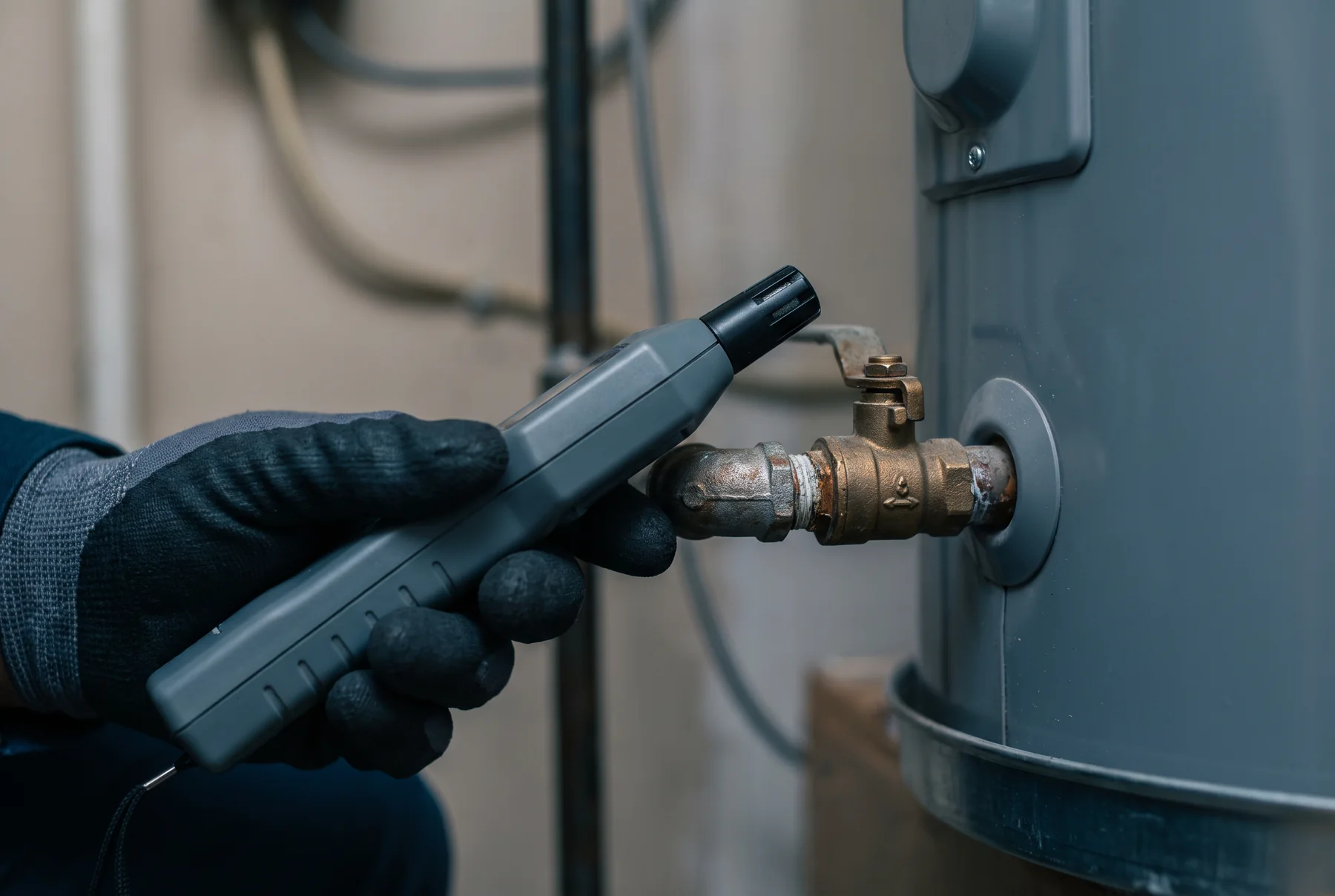
Close view of a gas detection tool being used near a water heater connection

Symptoms to respect

Some signs mean “stop,” not “try one more thing.”

Fuel or burning odor

Leave the area and use local emergency or utility instructions from a safe location. Never search for a leak with a flame.

Smoke, scorching or shocks

Do not touch a damaged appliance or wet electrical area. Isolate only when it can be done safely and without exposure.

Water near controls

Water at electrical parts, gas controls or a boiler should be treated as a stop-use condition until properly assessed.

CO alarm or illness

Get people and pets to fresh air and seek emergency assistance. Do not re-enter based on a guess that the alarm is wrong.
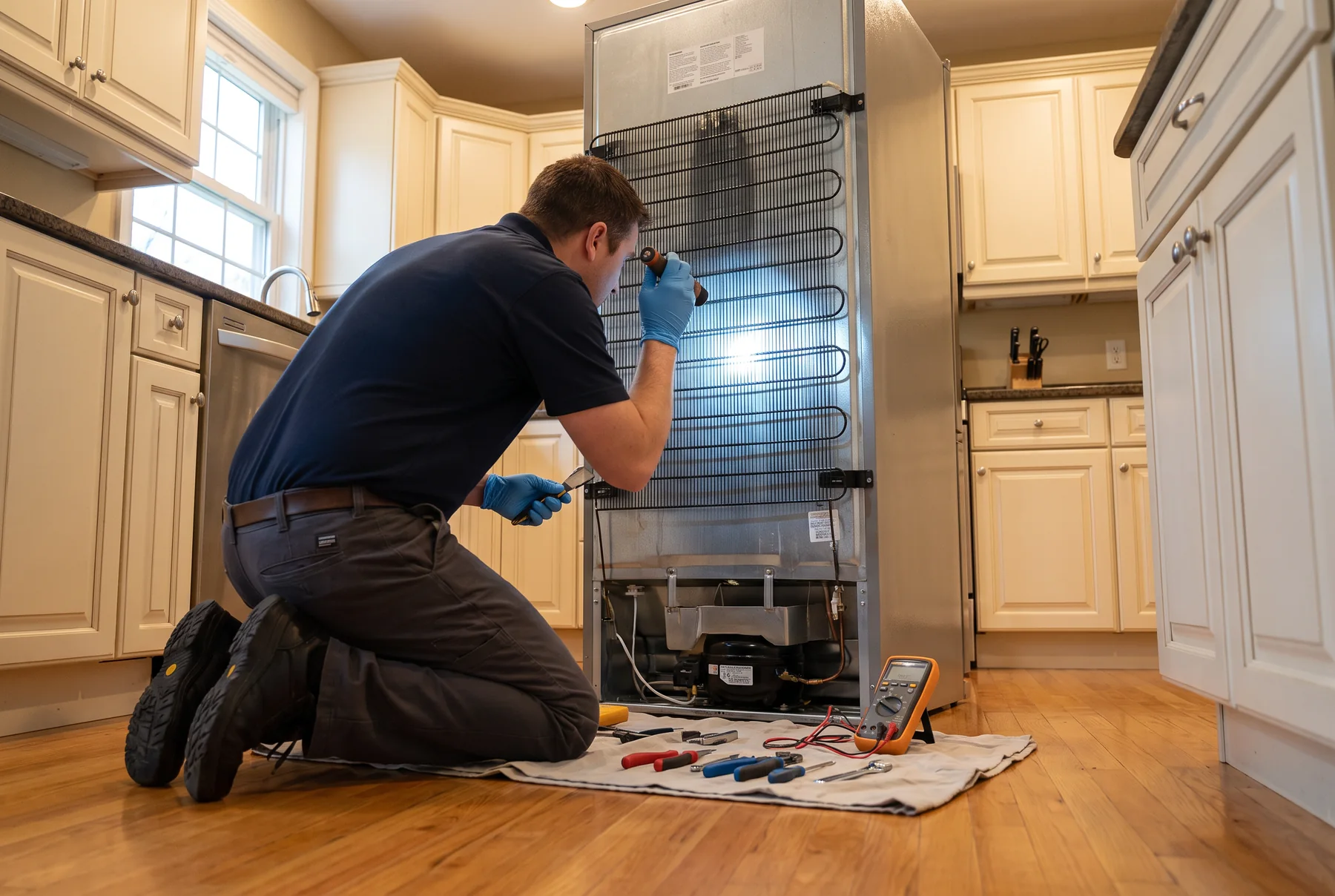
Technician inspecting the rear of a refrigerator in a home kitchen

Appliance-specific signals

Use the guide that matches the equipment in front of you.

Gas water heater

Look, do not disassembleWater at the base, soot, persistent pilot issues or a fuel odor need a safety-minded professional review.
Check the surroundingsKeep the area clear and follow the manual for any user-accessible display or status information.

Refrigerator

Verify food temperature separatelyUse a thermometer and protect food safety first. Warm compartments or a persistent alarm deserve attention.
Inspect only accessible basicsA clean door seal and unobstructed airflow matter; sealed refrigerant lines and electrical work are professional territory.

Cooktop

Notice ignition and flame behaviorA delayed ignition, uneven flame, odor or a control that behaves unexpectedly calls for a cautious stop and assessment.
Keep liquids away from controlsAllow surfaces to cool and use the manufacturer’s cleaning guidance rather than probing gas ports or electrical parts.

Boiler

Watch patterns, not one momentRepeated lockouts, pressure swings, drips or unfamiliar venting concerns are useful information for a qualified technician.
Respect pressure and combustionDo not open a boiler casing or adjust combustion-related components unless you are qualified for the model and system.

Low-risk checklists

Useful preparation without a repair attempt.

Choose an appliance to see observations that are generally safe to make from the exterior. Always follow the exact manufacturer instructions for your model; this is not a repair procedure.

Water heater observation list

  • Record any status light or error indicator without removing a panel.
  • Look for visible water around the unit from a safe, dry position.
  • Confirm that stored items are not blocking the appliance’s surrounding space or vent route.
  • Have the model and serial information ready from the exterior label, if safely accessible.
Organized diagnostic tools on a workshop benchHand checking a refrigerator door gasket

A steadier rhythm

Maintenance is mostly about access, records and attention.

During normal use

Keep manufacturer instructions, model details and a simple symptom note where they can be found. Avoid storing items against equipment that needs airflow or access.

When a change appears

Write down what changed and what was happening at the time. A clear account is usually more valuable than repeated resetting or trial-and-error adjustments.

At professional review

Share the appliance model, recent symptoms, photos taken safely and any prior documentation. Ask what was found and what warning signs to monitor next.

Know the boundary

Good information helps you ask better questions. It does not replace qualified work.

Modern appliances combine electricity, fuel, combustion, pressure and refrigerants. The safest choice is often to protect the scene and bring the right capability to it.

Electrical & electronic parts

Do not work around damaged cords, wet electrical areas, capacitors, controls or high-voltage components. A symptom may have several causes that look alike.

Fuel, combustion & venting

Gas connections, burners, flues and combustion adjustments have serious consequences when handled incorrectly. Keep the area safe and use qualified local assistance.

Sealed & pressurized systems

Refrigerant circuits and boiler pressure systems require appropriate tools, training and procedures. Do not pierce, recharge, bleed or alter parts without qualification.

Helpful context for any technician: appliance model, what changed, when it started, what you observed safely, and whether the issue is repeating.
Homeowner and technician discussing a cooktop manual in a bright kitchen

Make a clear handoff

A short symptom record can make professional assessment more focused.

Use this as a private preparation list—not as a request for remote diagnosis. It keeps the conversation grounded in what was actually observed.

Describe the moment

What was the appliance doing? Was it starting, heating, cooling, cycling or idle? Note approximate time and frequency.

Describe the setting

Was the area dry? Were doors, vents or burners clear? Was there an alarm, display message, smell or visible mark?

Keep it exact

Write display text exactly and take a safe, well-lit photo of exterior labels or visible conditions where appropriate.

State the safety action

Mention whether the appliance was stopped, the area was left, or an emergency or utility authority was contacted.

Common questions

Safety questions, answered clearly.

Treat the smell as potentially urgent. Do not operate electrical switches, use a phone in the immediate area, light a flame, or try to locate the source yourself. Leave the area with other people and pets, then follow your local emergency service or gas utility instructions from a safe location. Do not return simply because the smell fades.

Protect food safety before troubleshooting. Use an appliance thermometer, follow current local food-safety guidance, and move perishable items when safe temperatures cannot be maintained. A refrigerator may look normal while its cooling performance is reduced. Avoid opening panels, touching sealed tubing or repeatedly cycling power; record the symptoms and arrange qualified assessment if the condition persists.

A reset can clear a visible symptom without addressing the condition that triggered it. Repeating it may delay recognition of a fuel, venting, pressure, electrical or ignition problem, and can make the resulting pattern harder to explain. Follow the exact manufacturer instructions for your model, record any displayed code, and seek appropriately qualified help when a fault or safety shutdown returns.

Have the appliance type, make and model, the start time of the issue, and a concise description of what you observed from a safe position. Include display messages, unusual sounds, changes in temperature or performance, visible water or marks, and any steps already taken. If there was a fuel odor, alarm, smoke or shock concern, say so first and describe the safety action taken.

Contact draft

Organize a note before you reach out.

This browser-only form helps structure a safety question or site feedback. It does not request service, make a booking or transmit anything.

For general site feedback, you may choose to email [email protected]

Save a local draft

Please add a name.
Please enter a valid email.
Please choose a topic.
Please choose an appliance.
Please write at least 20 characters.

For urgent hazards, do not use this form. Follow local emergency, utility or medical guidance from a safe location.

Zepalunor offers general information only; always prioritize official manufacturer and local safety guidance.

Read the site terms